
When the last whistle blew on the 2026 FIFA World Cup this month, federal officials had a number to share that had nothing to do with goals scored. Across matches held in eleven US host cities, agencies including DHS, the FBI, and the Coast Guard say they intercepted more than 700 unauthorized drones that entered restricted airspace over stadiums and fan zones. Getting there took roughly 365 million dollars in dedicated counter drone spending, new interceptor hardware that captures rogue drones in nets rather than shooting them down over a crowd, and what the Coast Guard described as the first time it had run simultaneous domestic counter drone deployments in its history.

A Threat That Didn't Stay on the Battlefield
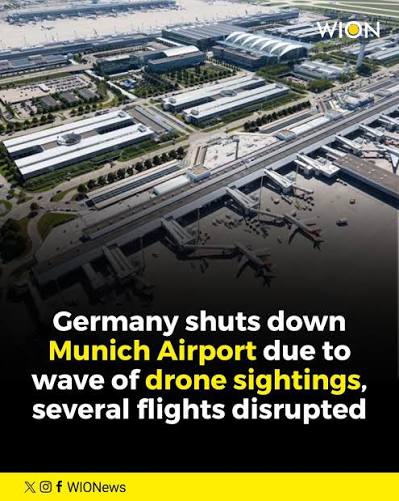
That kind of spending only makes sense if the threat is real, and by most accounts it is. Conflicts in Ukraine, Iran, and Nagorno Karabakh have all shown how much damage a cheap, commercially available drone can do in the right hands, and that lesson hasn't stayed confined to the battlefield. Over the past year, drones have grounded flights at Eindhoven Airport in the Netherlands, prompted Belgium to call in help from foreign militaries after incursions near airports, military bases, and a nuclear plant, and triggered a political fight in Germany over expanding counter drone authority after repeated sightings disrupted Munich Airport. Nobody has needed to prove sabotage for the disruption to be real. A grounded runway costs money and shakes public confidence whether the drone behind it was hostile or just lost.
Closer to Home
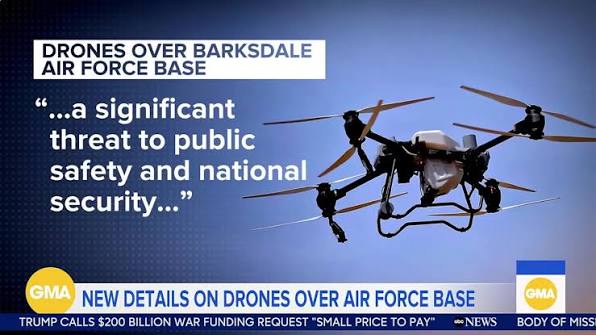
The US has had its own version closer to home. In March, security forces at Barksdale Air Force Base in Louisiana tracked repeated waves of a dozen or more drones over the flight line, aircraft that officials said showed non commercial signal characteristics and resisted jamming. It happened not long after the opening of Operation Epic Fury, the joint US and Israeli campaign against Iranian targets, and Northern Command has since confirmed incursions at other installations it won't name for security reasons. Nobody has publicly determined who was flying them. A few months later, a JetBlue pilot approaching JFK radioed the tower that something had struck the plane just above the cockpit at around 3,000 feet on final approach. The aircraft landed safely, and a post flight inspection turned up no damage and no debris, enough that investigators said preliminarily there's no evidence a drone was actually involved. True strike or not, the report itself landed in the same pile the FAA and the Nuclear Regulatory Commission are counting: hundreds of unauthorized drone incursions a year near civilian airports and nuclear plants.
The Gap Above the Fence Line
What connects all of this, a World Cup stadium, a military flight line, a commercial approach path, is a gap that has nothing to do with how good anyone's fence is. A perimeter camera system is built to watch a gate, a fence line, a parking lot at ground level. It was never built to watch the airspace forty feet above it, and a drone doesn't need to cross a fence to be a problem. It only needs to be seen loitering somewhere it shouldn't, tracked as it moves from one camera's view into another's, and flagged to the right team before it's gone again. That's a fundamentally different task than spotting someone climbing over a wall, and most security infrastructure built over the last decade simply wasn't asked to do it.
Most Sites Don't Get a Coast Guard Detachment
Most facilities will never get a nine figure security budget or a Coast Guard detachment. What they can reasonably ask for is a system that treats the sky as part of the perimeter rather than something outside its field of view, one that can pick a drone up on whichever camera happens to catch it and keep watching as it crosses into the next one's frame. We've written more about how cross zone tracking and drone feed integration fit into that picture on our perimeter security page, for anyone working through what it means for their own site.